


I know our entertainment choices can feel limited as disciples. Television, movies, and music often seem like minefields, and the options that align with our values can appear few and far between. At Girls Anthem, we’ve always emphasized how important it is to guard our eye and ear gates. The content we consume has the power to shape our emotions, our beliefs, and even the spiritual atmosphere in our homes.
Open doors to the enemy rarely start as obvious threats; they often begin as tiny cracks—lyrics we overlook, scenes we excuse, or narratives we accept without discernment. We tell ourselves, “It’s just music,” or “It’s just a show,” without fully considering the spiritual consequences. But this year, instead of focusing solely on what to avoid, we felt led to approach entertainment from a different angle.
Rather than highlighting only what we shouldn’t watch, we wanted to explore how certain shows—while not Christian—are not inherently promoting sin, but instead present real-world situations that can open the door to meaningful, biblical conversations within our homes. These shows are not perfect, but they create opportunities for spiritual reframing, healthy dialogue, and practical application of the Word when approached with wisdom and conviction.

We also want to explore how to spiritually “hold down the fort” in the entertainment and media mountain through prayer—praying for creators, writers, producers, and decision-makers to submit to God and resist the spirit of anti-Christ that often seeks to shape narratives in culture.
The three shows the Lord placed on my heart to unpack are:
A Million Little Things
This Is Us
All American
Before we dive in, it’s important to acknowledge something: in today’s world, realistic storytelling will include themes and characters that reflect current culture, and that often includes sin—whether it’s sexual immorality, dishonesty, addiction, betrayal, or LGBTQIA representation.
If you have a personal conviction not to watch something due to those elements, honor that conviction. God speaks to us individually, and obedience matters.
However, we as believers should not demonize or judge others who can watch a show with discernment while using it as a springboard for biblical engagement. There is a difference between consuming content passively and interacting with it intentionally. Sometimes, a show that portrays real-life issues gives us the chance to teach our families how to navigate those issues biblically, rather than pretending they don’t exist.
If you have a family member who is gay, would you erase them from the family dinner table? Would you ban them from Christmas gatherings? Most of us wouldn’t.

We may set boundaries, but distance was never the method Jesus used to transform hearts. We’re called to engage culture without conforming to it, to love without affirming sin, and to shine light without compromise.
With that in mind, let’s look at the shows more closely.
A Million Little Things
A Million Little Things follows a group of friends in Boston who are brought together by shared struggles and unexpected circumstances. Early in the series, we meet Jon, a beloved friend who dies by suicide. His passing becomes the catalyst that exposes secrets, tests relationships, and pushes each character to confront hidden wounds.
Jon leaves behind his wife, Delilah, and their children, Sophie and Danny. Much of the show revolves around the ripple effects of his death and the secret that connects him to others in the friend group. The storytelling weaves together themes of infidelity, suicide, sexual abuse, homosexuality, sickness, and betrayal.
What stood out to me was not just the writing but the intentional way the show allowed space for the children’s questions, fears, and observations. When themes like suicide and betrayal surface in entertainment, many believers feel the urge to turn it off. But what if, instead, we used it as a moment to ask our kids, “How do we respond when someone hurts us deeply? What does forgiveness look like after betrayal? How does God view depression, and how should we care for those who struggle with it?”
Later in the series, Danny, Jon’s son, comes out to his family. I remember wondering how the writers would handle this, given that the show hadn’t deeply explored that topic yet. Danny eventually introduces someone he’s interested in, and one of the adult characters also enters into a same-sex relationship after experiencing repeated betrayal from men.
Now, does that mean we celebrate or excuse sin? Absolutely not. But rather than labeling the show “ungodly” and moving on, we can take the opportunity to talk through these topics with our families.

Here’s how I would approach it with my own children:
Having a friend who identifies as gay doesn’t change God’s word.
Loving someone does not mean endorsing their choices.
We can minister to people by focusing on their humanity, not their sin.
Forgiveness looks different depending on the situation—sometimes God leads us to reconcile, and other times He calls us to release the relationship while still walking in love.
Suicide is never God’s will, and conversations about mental health should not be ignored.
Rather than shielding our children from every uncomfortable theme, we can teach them how to see it through a biblical lens.

This Is Us
Let’s move into This Is Us, a show that touched millions and brought many of us to tears with its honesty. The show follows the lives of three siblings—Kate, Kevin, and Randall—who were raised by loving yet overwhelmed parents, Jack and Rebecca. From childhood to adulthood, we watch how the complexities of family dynamics shape their identities, relationships, and faith.
To clarify, Randall is the only Black sibling raised in the Pearson household, and navigating life in a white family with unique challenges shaped much of his personal journey. The show addresses racism, adoption, grief, body image, sibling rivalry, marriage, and generational trauma.
What I want to emphasize here is how the show handles the reality of family tension. When parents don’t receive the emotional support, healing, and deliverance they need, they unintentionally pass pain to their children.
This Is Us gives us a raw look at:
Parental gaslighting
Sibling favoritism
Emotional neglect
The long-term impact of secrets
The weight of expectations
It provides an incredible opportunity to discuss how unhealed wounds can create fractures in a family for decades. It’s a beautiful example of how storytelling can open the door for discipleship, not division.

All American
All American is another show that handles complex themes with honesty and emotional depth. When the series first premiered, I had the privilege of writing a cover story on one of the lead actors, and I was struck by how the show explores real-life issues through both teens and adults.
While I don’t want to single out homosexuality as if it’s the only sin Christians react to, there is a powerful moment in Season 2 when Coop, a young woman who identifies as gay, has a tense but honest conversation with her mother.
Her mother has been dismissive and rejecting because of her Christian beliefs, and at one point even put Coop out of the house. Coop’s father, on the other hand, continues to love her, even while navigating the tension.
This is not a moment to dismiss the show—it is a moment to ask ourselves, “What would I do if my child came home and told me they were struggling with same-sex attraction?” Would we throw them out? Reject them? Label them? Or would we do what Jesus does—love them while praying, guiding, and trusting the Holy Spirit to transform their hearts?
As someone who personally wrestled with same-sex attraction from my preteen years into my early twenties, I can tell you that it was not rejection that set me free. It was my mother’s love, prayers, and refusal to define me by what I was struggling with. She saw beyond the label I was trying to adopt and held space for God to do the work in me. That is the kind of discipleship our homes need.
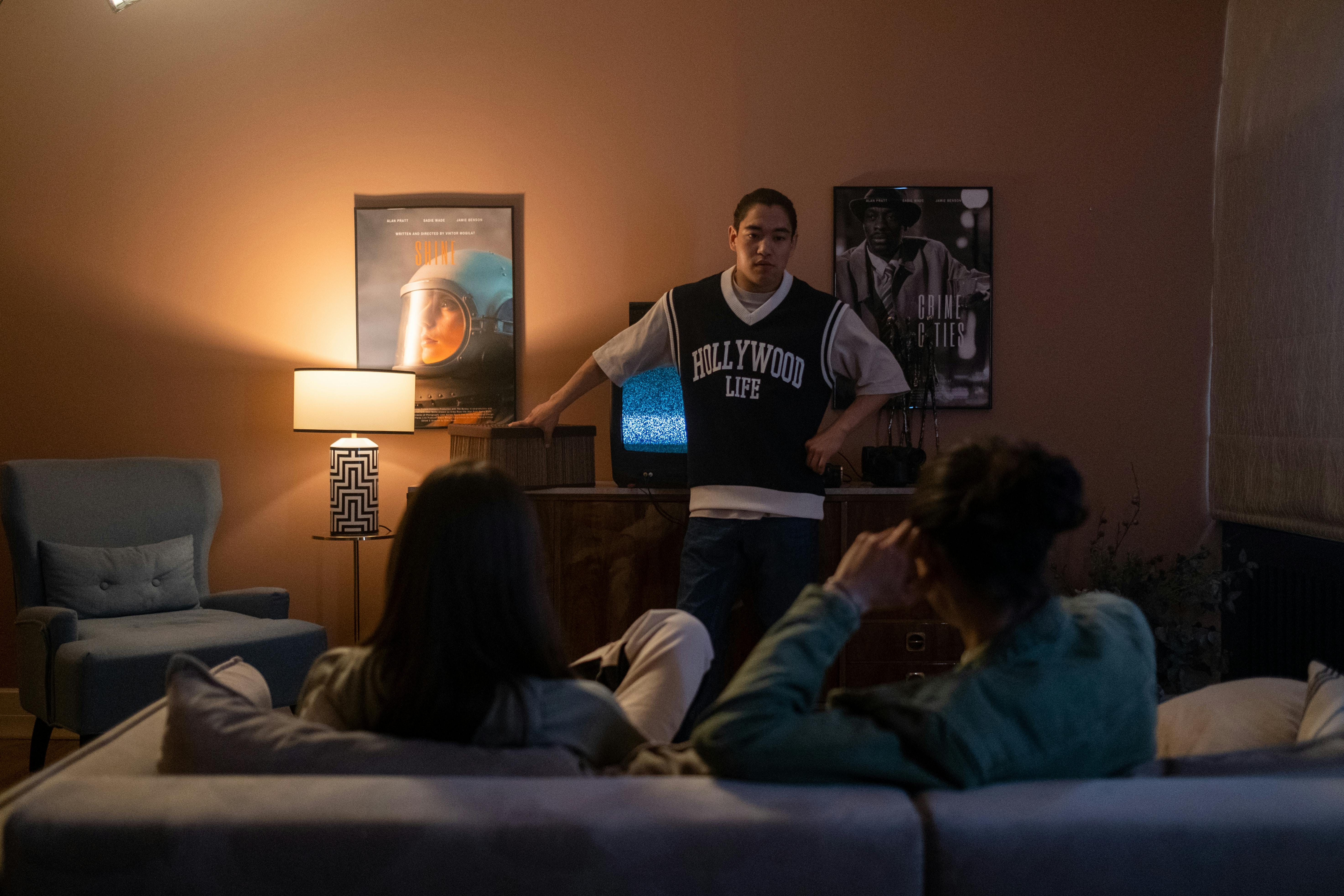
We don’t need television to teach our children, but we can use shared entertainment as a gateway to meaningful family dialogue. Sitting together to watch something and then following it up with open, biblical conversation allows our families to think critically and compassionately. It creates a safe space for discussion rather than silence or shame.
So I’m not suggesting you watch every show mentioned here. In fact, two of them are no longer airing and are only available on streaming platforms. What I’m saying is this: before you dismiss a show because it depicts sin, ask yourself—are they celebrating the sin, or are they simply portraying real life? There is a difference between glamorizing something and presenting it as part of the human experience.
Realism gives us room to respond with discernment, not detachment.

Praying for the Entertainment & Media Mountain
As disciples, we have a responsibility not only to consume content wisely but to intercede for those creating it. We can either stand on the sidelines and complain about the media, or we can partner with heaven and become part of the solution. Here are ways we can stand in the gap:
1. Pray for bold, obedient Christian creatives.
Pray that those called to entertainment—writers, actors, producers, directors, editors—will create what God tells them without compromise, and that they won’t settle for platforms that force them to dilute their convictions. This includes music as well.
2. Pray for Hollywood to repent and return to God.
Intercede for the hearts of decision-makers and financiers in film, television, and music. Pray that God would replace hearts of stone with hearts of flesh and that repentance would touch boardrooms, studios, and sets.
3. Pray for protection over believers already in the industry.
Ask God to strengthen those who are undercover or quietly standing for righteousness. Declare that they, like Daniel, will purpose in their hearts not to defile themselves, regardless of pressure.
4. Pray for discernment among consumers.
We must stop supporting content that aggressively pushes ungodly agendas while still acknowledging there is a difference between storytelling and indoctrination. Real life is messy, and art often reflects that—but agenda-driven content is something else entirely.
5. Pray for resources and excellence in Christian media.
One of the most common critiques of Christian film and television is that the quality is poor or the storytelling is unrealistic. We need to pray for funding, equipment, training, and creative freedom so believers can produce content that is spirit-led and skillfully crafted.
God’s power does not stop at the gates of Hollywood. He is just as present in studios and writers’ rooms as He is in pulpits and prayer circles. The entertainment mountain is not off-limits to Him, and it should not be off-limits to our engagement.
Conclusion
As believers, our calling is not isolation, it’s influence. Instead of hiding from culture, we can approach it with discernment, lead our families with wisdom, and transform everyday moments into kingdom conversations. Entertainment doesn’t have to be the enemy when we approach it with intention. Shows that depict real situations—flawed people, complex relationships, and imperfect choices—can become opportunities to teach, correct, connect, and disciple.
We don’t avoid darkness by pretending it isn’t there. We push it back by turning on the light.
So, whether you choose to watch these shows or not, let this be your takeaway: don’t just consume content, curate conversations. Don’t just turn off what concerns you; use it to train the next generation to think biblically in a world that won’t. And above all, pray. Pray for the storytellers. Pray for the industry. Pray for the gatekeepers. Pray for your own home.
We can complain about media, or we can disciple through it. We can condemn culture, or we can shape it. The choice is ours, and the opportunity is now.
Questions for Discussion When Watching TV
1) What can we learn through this dialogue being presented to us, and how does God’s Word apply?
2) Is this show pushing an agenda/trying to indoctrinate us, or does it give us a chance to approach the content with a Biblical worldview?
3) What sin is being highlighted/condoned in the content? How can we discuss how it goes against God’s Word?
4) How can we use this content to help our children make Godly decisions with their entertainment when we’re not around?
5) Are there alternatives to this type of content that we haven’t accessed? Take some time to research and see.
There are more questions that you can ask, but these are some great starters. I pray this article helps you navigate your streaming.
